Programme
Keynote Speakers
(in alphabetical order)
Co-creating Drivers for Green Social Transformation (Case Studies in Japan)
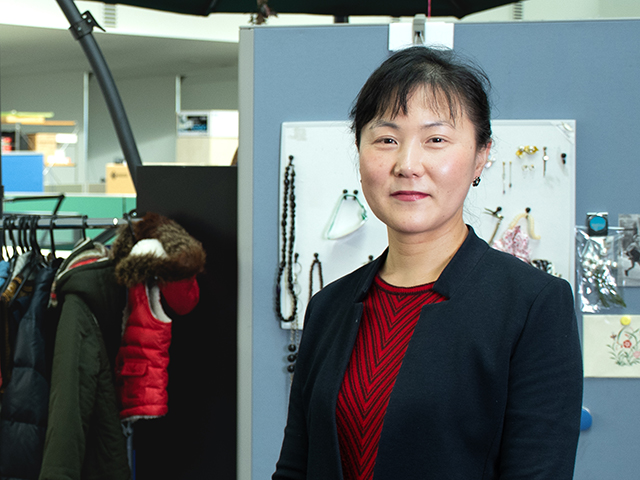
Professor Misuzu Asari
Professor
Research Institute for Humanity and Nature
Abstract
Green social transformation is urgently needed to solve the various challenges facing the natural environment and human society, centered on environmental problems, on a scale ranging from local to global, and to make them sustainable. To achieve this, it is necessary not only to establish an academic field, but also to move between academia and social implementation, and for diverse stakeholders from industry, academia, government, and the public to inclusively co-create and sustain solutions.Therefore, we will develop collaborative relationships with Universities and other institutions both domestically and internationally, study case studies of green social transformation, and at the same time build and operate interdisciplinary and trans-disciplinary platforms in various regions both domestically and internationally, in collaboration with industry, academia, government, and the public, to implement and expand these transformations into society.
Along with the concept, I will introduce several case studies that demonstrate its effectiveness.
Biography
Her current special field is the research of waste management, especially plastic products/waste, disaster waste and food waste. She is also involved in a campaign to raise awareness of 3R (Reduce Reuse and Recycle), and hard at the “3R and Low carbon society”-Licensed/Leadership program for development of human resources (https://3r-cc.jp/). Additionally, she promotes 3R research network and manage international academic conference (http://www.3rincs.org/).One of her other fields is community sustainability. This theme includes environmental management system, environmental/SDGs related education, and lifestyle. She has continued environmental communication in Kyoto University and related institutes (http://www.eco.kyoto-u.ac.jp/). Also, her team focus on SATOYAMA (mountainous area) and maintain abandon school as “SDGs education & communication centre” (https://www.kotos-kyoto.jp/).
She widens her field on SDGs concept and promote activities (https://eco.kyoto-u.ac.jp/sdgs/kyoto-times/). She is also focusing on the education and collaboration of future generations and presides over events such as the Global Environment Youth Summit (https://kyoto-youthsummit.com/en/).
Collaborative Knowledge Practices in the Age of AI: Implications for Transdisciplinary Education
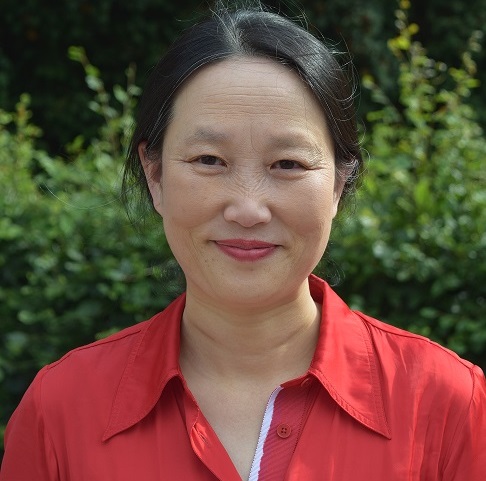
Dr Seongsook Choi
Senior Lecturer
Interdisciplinary Studies, The University of Edinburgh
Abstract
As Generative AI becomes increasingly embedded in educational settings, it invites us to reconsider how collaborative knowledge is developed across disciplinary boundaries. Rather than asking whether AI improves learning, this keynote explores how its growing presence encourages us to rethink the collaborative processes through which knowledge is negotiated, integrated and applied in transdisciplinary education. Drawing on research into interdisciplinary collaboration, digitally mediated learning, challenge-based education and interactional analysis, the keynote uses illustrative examples to examine questions of dialogue, knowledge integration, disciplinary perspectives and epistemic authority. It argues that the future challenge lies in designing learning environments that foster critical, collaborative and integrative knowledge practices in an age of AI.Biography
Dr Seongsook Choi is Senior Lecturer in Interdisciplinary Studies at the University of Edinburgh and Co-Programme Director of the MSc Education Futures at the Edinburgh Futures Institute. Her research explores interdisciplinary and transdisciplinary collaboration, with a particular focus on knowledge integration, collaborative practices and interaction across disciplinary boundaries. Her current interests include the implications of generative AI for collaborative knowledge practices and transdisciplinary education. She also serves on the Leadership Board of the Global Alliance for inter- and Trans disciplinarity (ITD Alliance), where she Co-Chairs the Asia Regional Network.Resilience, Well-being and Creativity Engagement: A ‘Whole of Life’ Approach to Transdisciplinary Education
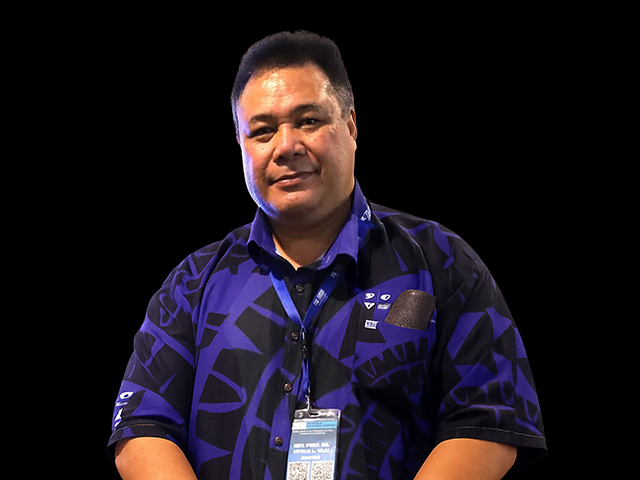
Professor Dr Upolu Lumā Vaai
Professor and Vice Chancellor
Pasifika Communities University
Abstract
Education institutions today struggle to deal with transdisciplinary systems not because they don’t have the capacity and resources, but because such endeavors are consistently grounded on a dominant philosophical tradition that restricts multidimensionality of consciousness and interdependent flows of knowledge. Transdisciplinary is not a new field to indigenous communities. This paper aims to outline the principles of a relational ‘whole of life’ philosophy to assist with a transdisciplinary approach. In fact, indigenous communities live transdisciplinary every day, underpinned by their ‘whole of life’ knowledge systems and their philosophies and ethics of relationality. Such philosophies shape the way resilience, well-being, and creative engagement are invented and activated. Therefore, if we are to create a robust transdisciplinary approach to education that is integrated yet multidimensional, we are not just invited to learn from indigenous communities. We are summoned to change the philosophy that underpins our knowledge systems to one that is ‘the whole of life’ and relational.Biography
Professor Dr Upolu Lumā Vaai is the Inaugural Vice Chancellor and President of the Pasifika Communities University (PCU), formerly known as the Pacific Theological College, a regional University of Pacific churches based in Fiji he had helped established and transitioned since 2019. He is Professor of Theology & Ethics, a practiced indigenous philosopher and decolonial educator and theologian. He is a regional leading voice in reclaiming Pacific ‘whole of life’ philosophies to underpin a (k)new development consciousness, especially one that is understood outside of the one-dimensional and deductive nature of Western philosophies.He annually trains many regional and international policy makers on the ‘whole of life’ philosophy and its critical role in transforming the current development story. He is a member and advisor to many international forums such as the Faith and Order Commission of the World Council of Churches, UNODC, UNDP Fiji, World Bank Pacific, Asia Development Bank, and is regularly invited by many Universities as well as international forums to speak on Pacific relationality, relational philosophy, relational hermeneutics, relational theology, and relational ways of knowing and being, which are ideas scattered throughout his many books and publications and research projects, including his two new books, Climate Change in Pacific Relational Perspectives (2026), and The ‘Whole of Life’ Way (2025).